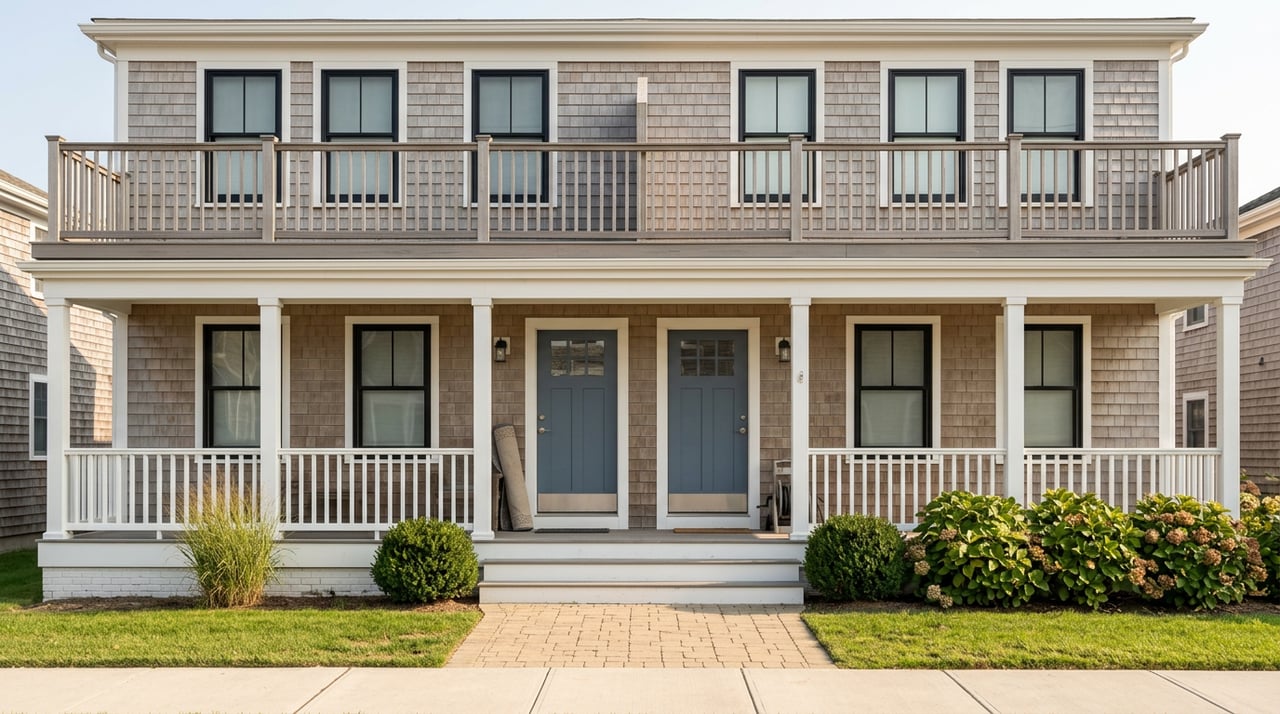
Ocean City's New Rental Tax Skips Certain Bookings. For Buyers, That Gap Is the Real Story
August 20, 2026
August 20, 2026
On July 17, 2025, Ocean City's City Council voted 4-3 to add a 3 percent tax to short-term rentals booked through Airbnb, Vrbo, and similar online platforms. Hotels, motels, and bed and breakfasts were left out. So were rentals booked through a licensed real estate agent. An earlier draft of the ordinance had included hotels and motels, but that language was stripped out before the final vote.
If you're shopping for a shore home in Ocean City with an eye toward rental income, this is worth more of your attention than the median price. The median tells you what a house costs. The tax code tells you what you'll actually keep, and it turns out the answer depends less on the property than on how you decide to book it.
The ordinance, formally a "transient accommodations fee," targets what the city calls a "transient space marketplace." That means Airbnb and Vrbo. It does not mean a hotel counter, and it does not mean a phone call to a rental office.
Under existing New Jersey law, a rental booked directly by an owner with fewer than three units, and not run through an online marketplace, generally isn't subject to the state's 6.625 percent sales tax or its 5 percent state occupancy fee, together 11.625 percent. Rentals handled by a licensed real estate broker performing the full booking process, including an in-person or offsite key handoff, are also generally excluded from those same state transient accommodation taxes. Ocean City's new 3 percent fee follows that same logic: it applies to marketplace bookings and exempts everything the state already exempted.
Stack it up and a rental booked through Airbnb faces a combined 14.625 percent in state and municipal taxes. A rental booked through a full-service real estate agent, meeting the criteria above, can avoid nearly all of it. That is not a rounding error. On a $3,000 summer week, it is the difference between roughly $439 in taxes and close to none.
| Booking channel | State sales tax + occupancy fee | Ocean City's municipal fee | Combined |
|---|---|---|---|
| Airbnb, Vrbo, or similar marketplace | 11.625% | 3% | 14.625% |
| Hotel, motel, or bed and breakfast | 11.625% | Exempt | 11.625% |
| Full-service licensed real estate broker (qualifying rentals) | Generally exempt | Exempt | Close to 0% in these specific taxes |
| Owner renting directly, fewer than 3 units, no marketplace | Generally exempt | Exempt | Close to 0% in these specific taxes |
This is general information, not tax advice. Whether a specific rental qualifies for these exemptions depends on how it's booked, how many units an owner holds, and whether the transaction meets New Jersey's criteria for broker-handled rentals. Confirm your situation with a tax professional before you assume any of these categories apply to you.
Resident Steve Kearns, who owns rental property in Ocean City, told the council the exemption for agent-booked rentals created an uneven playing field. He argued that
real estate agencies simply can't or don't get the job done filling those all-important weeks
in the summer, meaning the tax gap doesn't just shift cost, it shifts occupancy risk too. A self-managed Airbnb listing might fill faster during shoulder weeks than a traditional rental office relying on repeat renters and referrals. The tax break for agent bookings only helps if the agent can actually fill the calendar.
Here is where the story gets specific in a way no market report will tell you. Of the four council members who voted for the tax, two work in real estate. Pete Madden is a real estate broker who also facilitates rentals. Jody Levchuk owns rental property himself. Neither of their rental businesses would be subject to the new fee, because both operate through channels the ordinance exempts.
Attorneys for Airbnb sent the city a letter arguing that both men had a conflict of interest and should have recused themselves from the vote, since the ordinance they were approving carved out an exemption that happened to cover their own business models. If both had stepped aside, the 4-3 vote would have failed. Council President Terry Crowley Jr. and City Solicitor Dorothy McCrosson both declined to comment on the allegation at the time, citing the possibility of litigation.
Airbnb has argued publicly that the ordinance violates New Jersey's constitutional equal protection guarantees, since it taxes one category of booking channel while leaving hotels, motels, and agent-facilitated rentals untouched. As of May 2026, the company was still pressing that argument, now centered on the conflict-of-interest question raised in the fall of 2025. The city has maintained the tax is lawful and expects it to survive the challenge, and the state required a review period before the ordinance could take effect at all, with local reporting citing timelines that ranged from November 2025 to January 2026 for when platforms would actually begin collecting it.
The city projected the tax would generate roughly $1.8 million in new revenue in its first year, money officials said would go toward easing the burden on local taxpayers. Whether that number holds depends partly on how many hosts shift their booking behavior once the tax lands on their guests' final bill, and partly on how the legal challenge resolves.
There's also a regional wrinkle worth knowing if you're comparing towns. As of this writing, neither Margate nor Ventnor, the Downbeach communities just south of Ocean City, had adopted a similar marketplace-specific fee. If Ocean City's rental prices creep up relative to its neighbors because of this tax, that's a variable worth factoring into any decision about which shore town to buy in for rental purposes, separate from square footage or proximity to the boardwalk.
If you're evaluating a shore property with rental income in the plan, the sticker price and even the projected weekly rate only tell part of the story. The channel you use to book it changes your effective take by more than a full percentage point of the rental price, and possibly by more if you also count the broker's commission against the tax savings.
Before you assume a certain rental strategy, it's worth asking a few questions specific to Ocean City:
None of this changes the appeal of Ocean City as a place to own. It changes how you should model the income side of that ownership, and it's exactly the kind of detail that gets lost when a buyer compares markets using median price and average daily rate alone.
Does the 3 percent tax apply if I rent my own house directly to family or friends? Direct rentals by an owner with fewer than three units, not booked through an online marketplace, generally fall outside both the state's transient accommodation taxes and Ocean City's new municipal fee. Confirm your specific situation with a tax advisor, since the criteria matter.
Does this tax apply to long-term rentals? The ordinance targets transient, short-term bookings made through online marketplaces. It was built around the same short-term rental framework the state already uses, not standard annual or seasonal leases outside that structure.
Has a court ruled on Airbnb's challenge yet? As of May 2026, the legal challenge was still active, with Airbnb pressing arguments around both equal protection and an alleged conflict of interest in the original council vote. Anyone weighing rental income into a purchase decision should treat this as an evolving situation, not a settled one.
Could this tax change again? City council members have signaled they intend to revisit the ordinance as results come in, and the outcome of Airbnb's legal challenge could also force revisions. Buyers planning around rental income should build in room for that uncertainty rather than treating today's tax structure as permanent.
If you're weighing Ocean City against other shore towns for a second home, or trying to figure out what a specific property's rental math actually looks like once you account for booking channel, taxes, and licensing, Amy Reuter can walk through the details with you. Let's Connect.
Stay up to date on the latest real estate trends.

When people think about summer in South Jersey, the beaches often get most of the attention. But just a short drive inland, Gloucester County offers its own collection… Read more

Summer at the Jersey Shore is about so much more than spending a day at the beach. While miles of beautiful coastline certainly steal the spotlight, locals know some o… Read more

If you're picturing Somers Point as simply the town you drive through on your way to Ocean City, you may be missing what makes it such a special place to live.
Amy Reuter brings together luxury-level marketing, strong negotiation, and honest guidance to help clients navigate every move with confidence. From South Jersey primary residences to South Jersey beach homes, Amy creates a thoughtful, highly personalized experience centered around strategy, communication, and results.
AMY REUTER
[email protected]
(856) 229-2473
ADDRESS
198 FRIES MILL RD
TURNERSVILLE, NJ 08012