Past The Median: What Haddonfield's Market Really Asks Of Buyers And Sellers
August 6, 2026
August 6, 2026
Open any portal and Haddonfield looks like a single number. Depending on the source and the month, that number sits somewhere between the mid-$800s and $1.25M. In March 2026, Redfin put the median sale price at $862,000. By July 2026, Movoto's median list price had climbed to $1.25M. Fox & Roach's own market page shows a $872,500 median sale and homes closing at 102% of list.
Pick whichever figure you want. None of them tell you what the money actually buys, because two mechanisms sit underneath the price that most buyers and sellers do not see until they are already inside a contract. One is a borough ordinance. The other is a state law that was rewritten in July 2025 and is still catching people off guard.
Start with the change that has the sharpest teeth. On June 30, 2025, Governor Phil Murphy signed the FY2026 budget into law, and inside it was a full rewrite of what most people still call the mansion tax. The state now calls it the Graduated Percent Fee. For contracts fully executed on or after July 10, 2025, three things changed at once:
Here is the schedule, straight from the statute:
| Sale price | Seller pays |
|---|---|
| $1,000,000 – $1,999,999 | 1.0% |
| $2,000,000 – $2,499,999 | 2.0% |
| $2,500,000 – $2,999,999 | 2.5% |
| $3,000,000 – $3,499,999 | 3.0% |
| $3,500,000 and up | 3.5% |
Because each rate hits the whole price, the tier boundaries are cliffs. A Haddonfield home that closes at $1,999,000 costs the seller roughly $19,990 in Graduated Percent Fee. Push that same home to $2,001,000 and the seller owes about $40,020. Two thousand dollars of price creates twenty thousand dollars of tax. That single fact reorders how a listing near a tier line should be priced, marketed, and negotiated.
A property sold for $2,200,000 falls in the 2% tier. The mansion tax is $44,000, not $22,000 on just the amount over $2 million.
That is not an exotic scenario in Haddonfield. With inventory routinely including homes in the $1.85M and $2.15M range on Fox & Roach's own map, the tier line runs directly through the local market.
Two implications follow. Sellers whose homes appraise near a boundary have a genuine reason to price under it. Buyers, meanwhile, benefit from the removal of their old 1% obligation at closing, but should read contract language carefully. New Jersey Realtors and multiple real estate attorneys have noted that the parties can still contractually reallocate the fee. Silence in a contract now favors the buyer. Silence a year ago favored the seller. Whichever side you sit on, the boilerplate matters.
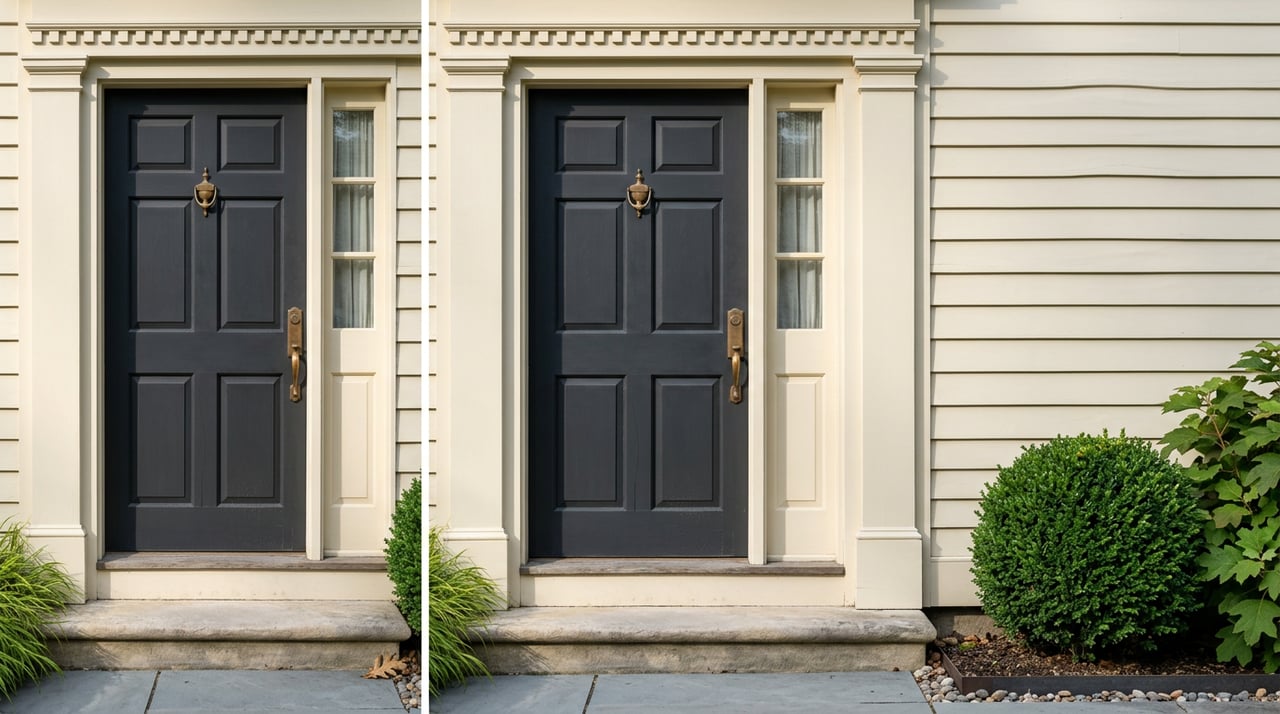
The second mechanism is quieter and easier to miss. Haddonfield's Historic District is not a marketing phrase. It is a legally defined area codified in Chapter 135, Article VI of the Borough's Land Development ordinance, and it covers 488 houses, buildings, and sites in the historic core. More than 150 of them meet the criteria used by the National Register of Historic Places.
If your address falls inside that boundary, any exterior change requires a Certificate of Appropriateness from the Historic Preservation Commission, with final approval from the Planning Board. Exterior changes include the obvious ones like additions and new construction. They also include decks, porches, railings, steps, and site or landscape alterations. Interior work is generally outside the review. House color is not regulated.
The HPC meets on the second Wednesday of each month at 7:30 p.m. in the Borough Hall auditorium. Applications go to the Zoning and Construction Office in Room 104. HPC approval must come before construction permits are issued, which means the review is a scheduling constraint, not just a paperwork one. A buyer who plans to close in April and add a rear deck by Memorial Day is on a timeline that depends on when the Commission meets and whether the plans arrive complete enough to move on first review.
This is why "Historic District" is a two-sided fact in a buyer consultation. The same ordinance that keeps the streetscape intact and supports property values also narrows the menu of changes a new owner can make quickly or cheaply. Not every Haddonfield address is inside the district, and the boundary is precise. Confirming that boundary should be a routine part of due diligence on any home built before the mid-20th century in the town's core.
Now the numbers start to speak. Redfin recorded a $862,000 median sale price in Haddonfield in March 2026, with homes selling in 19 days. Fox & Roach's page shows homes going at 102% of list. Movoto's July 2026 snapshot shows a $1.25M median list price and a $422 median list price per square foot. The gap between "median sold" and "median listed" is telling: the top of the market is pulling the listing side of the ledger up faster than the closing side, and a meaningful share of Haddonfield sales are landing at or above the $1M threshold that triggers the Graduated Percent Fee.
For a seller at $1.05M, the fee is a $10,500 line item in the closing statement that did not exist for the neighbor who sold in June 2025. For a seller at $1.85M, it is $18,500. For a seller weighing whether to accept $2.02M or counter to $1.98M, the tax math is worth $20,000 more than the price difference.
For a buyer, the median obscures a different question: how much of the price you are paying reflects the historic-district premium, and how much flexibility comes with the home. A colonial two blocks outside the district and a colonial two blocks inside it can list within $50,000 of each other and offer very different renovation timelines. The portal will not tell you which is which.
The thesis is simple: in Haddonfield today, price is not the whole price, and location inside the town has legal consequences the portals cannot show you. A pricing conversation that ignores the Graduated Percent Fee tiers, or a buyer consultation that ignores the Certificate of Appropriateness process, is a conversation happening on last year's map.
Does the mansion tax apply to every Haddonfield home? No. The Graduated Percent Fee applies to residential deeds recorded with consideration over $1,000,000. Sales below that threshold are subject to the standard Realty Transfer Fee only.
Can the buyer and seller still agree to split the fee? Yes. Legal responsibility now sits with the seller for deeds recorded on or after July 10, 2025, but the parties can contractually allocate the cost differently. The default is what changed; the freedom to negotiate did not.
How do I find out if a specific address is in Haddonfield's Historic District? The district's catalog of structures and boundary are defined in Chapter 135 of the Borough ordinance and administered by the Historic Preservation Commission through the Zoning and Construction Office at Borough Hall. Confirming boundary status is a standard step before writing an offer on a home in the historic core.
Does the historic designation restrict interior renovations? Generally no. The Certificate of Appropriateness process is focused on exterior alterations, in-fill construction, and site changes visible from the public way. House paint color is not regulated by the HPC.
Does the historic-district process add cost to a renovation? It adds time and documentation. Applications require plans, elevations, materials, and scale information sufficient for the Commission to assess compatibility. Building that review into the project schedule, rather than treating it as a formality, is the practical adjustment.
Whether you are pricing a listing that sits near a tier line, weighing an offer on a home inside the historic core, or trying to decide which Haddonfield block matches how you actually want to live, the answer starts with a conversation, not a portal search. Amy Reuter works both sides of the South Jersey market with the preparation and clarity these decisions deserve. Let's connect.
Stay up to date on the latest real estate trends.
When people think about summer in South Jersey, the beaches often get most of the attention. But just a short drive inland, Gloucester County offers its own collection… Read more

Summer at the Jersey Shore is about so much more than spending a day at the beach. While miles of beautiful coastline certainly steal the spotlight, locals know some o… Read more
If you're picturing Somers Point as simply the town you drive through on your way to Ocean City, you may be missing what makes it such a special place to live.
Amy Reuter brings together luxury-level marketing, strong negotiation, and honest guidance to help clients navigate every move with confidence. From South Jersey primary residences to South Jersey beach homes, Amy creates a thoughtful, highly personalized experience centered around strategy, communication, and results.
AMY REUTER
[email protected]
(856) 229-2473
ADDRESS
198 FRIES MILL RD
TURNERSVILLE, NJ 08012